
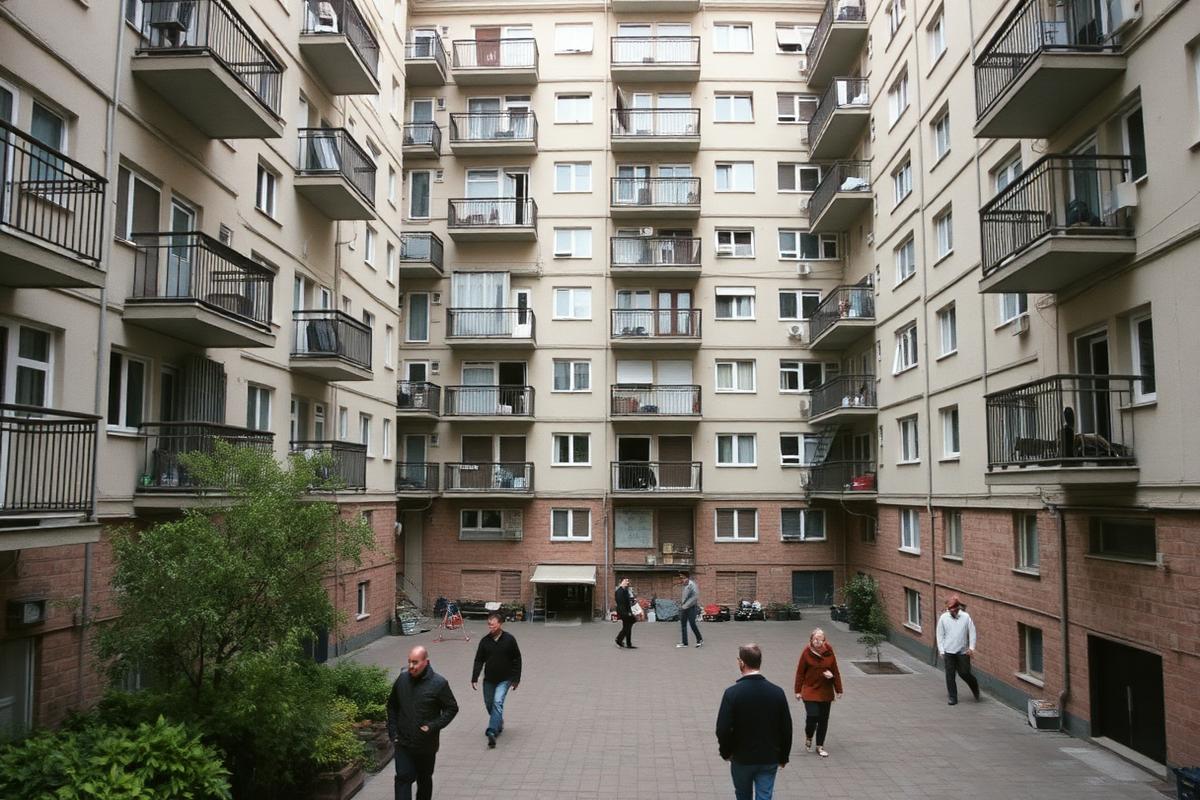
Above this size the role may only be filled by a company or sole trader whose main activity is property or condominium management, with the corresponding professional competence.
The threshold has a practical reason, it is not formal bureaucracy. A building above 100 units typically has annual common cost turnover in the tens of millions of forints, while maintenance and renovation decisions (lift, roof, facade) run into millions each. Handling sums of this scale, preparing the statutory annual accounts, and coordinating supplier contracts and repairs create an administrative load that a volunteer representative with another full time job realistically cannot carry responsibly.
In practice this means such a building either engages a management company for the full scope of duties, or elects a qualified sole trader as common representative. The choice is not a formality: the general meeting must be satisfied that the candidate genuinely has the professional background, references and, most importantly in practice, the capacity to handle several parallel tasks.
Many larger buildings find that a management model sized for smaller houses simply does not scale: what could be tracked by hand with 30 flats requires dedicated financial and technical capacity at 150, with a separate fault reporting channel and regular, itemised reporting.
It is also worth knowing that the threshold counts registered units, not flats: a building with 100 flats but plenty of shops, garages and storage units can easily exceed 130 to 150 registered units, while owners still think of themselves as a small building based on the flat count. It is therefore worth checking the unit count recorded in the founding deed in good time.
If your building is approaching or has passed the 100 unit threshold, it is worth rethinking the management model in good time rather than at the last minute. Merbo has experience managing larger buildings with several hundred units, with a dedicated financial and technical team.