
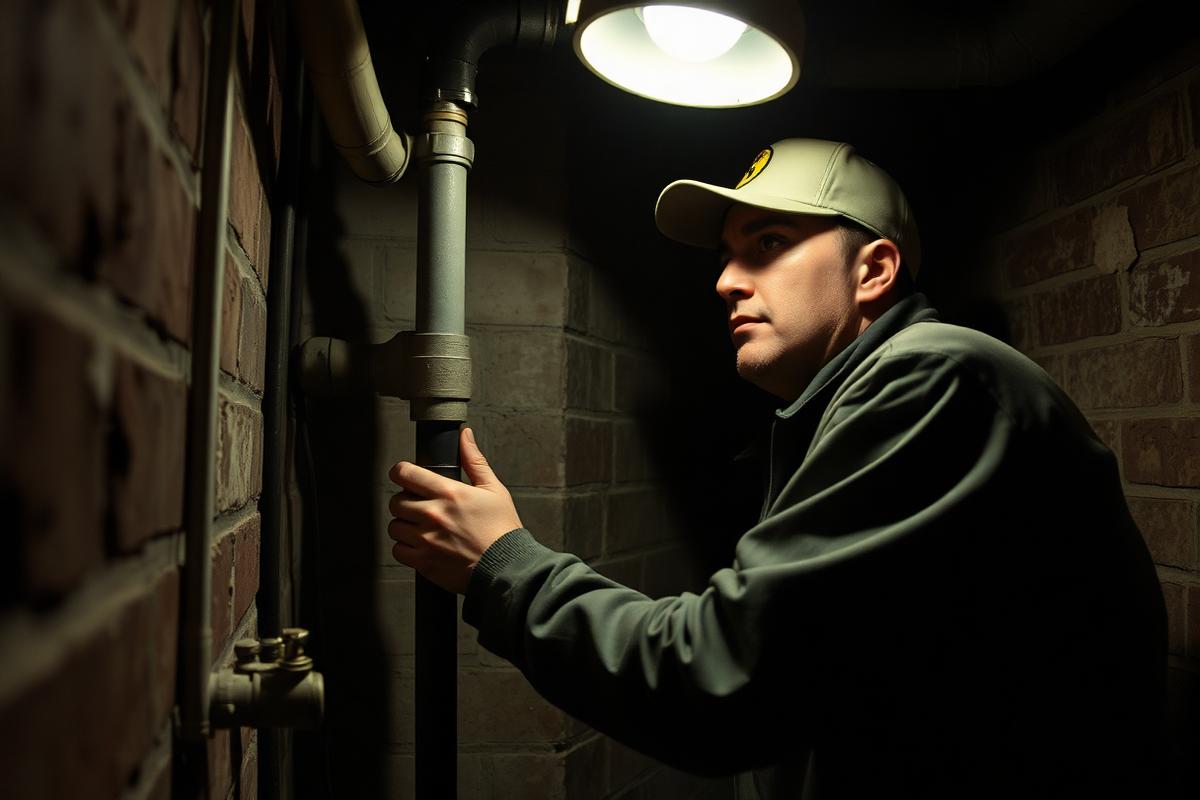
Clarifying the line between the two is essential in every building.
Emergencies are typically faults that cause immediate damage or endanger safety: an active water leak or burst pipe, a full power cut in part of the building, a smell of gas or suspected gas leak, a person stuck in a lift, or a fire alarm sounding continuously. In these cases every minute counts and the damage grows exponentially with delay.
A well drafted contract sets a separate, short response time for these situations, typically on-site intervention within 1-2 hours with 24/7 phone availability. In practice this means there is someone to call at one in the morning who can actually take action.
Non-urgent faults, a dripping tap, a loosely closing door, worn paint in the stairwell, are handled in the normal workflow, typically within a few days. If every report were treated as an emergency, the system would be overloaded.
An important practical tip: in case of a gas smell the first call must always go to the gas provider's emergency line, not to the property manager. The manager then coordinates the next steps, but the primary safety measure cannot wait.
The same applies to a person stuck in a lift: the first call goes to the lift company's emergency number or the ambulance service, not the representative, whose role is to document the case afterwards and arrange an extraordinary inspection of the lift.
Merbo provides every managed building with a clear, written list of what counts as an emergency, who to call, and what response time to expect.